Credit & Banking
Secured vs Unsecured Credit Cards
A secured credit card requires a cash deposit; an unsecured card does not. Here's how they differ, who each suits, and how to use one to build credit.
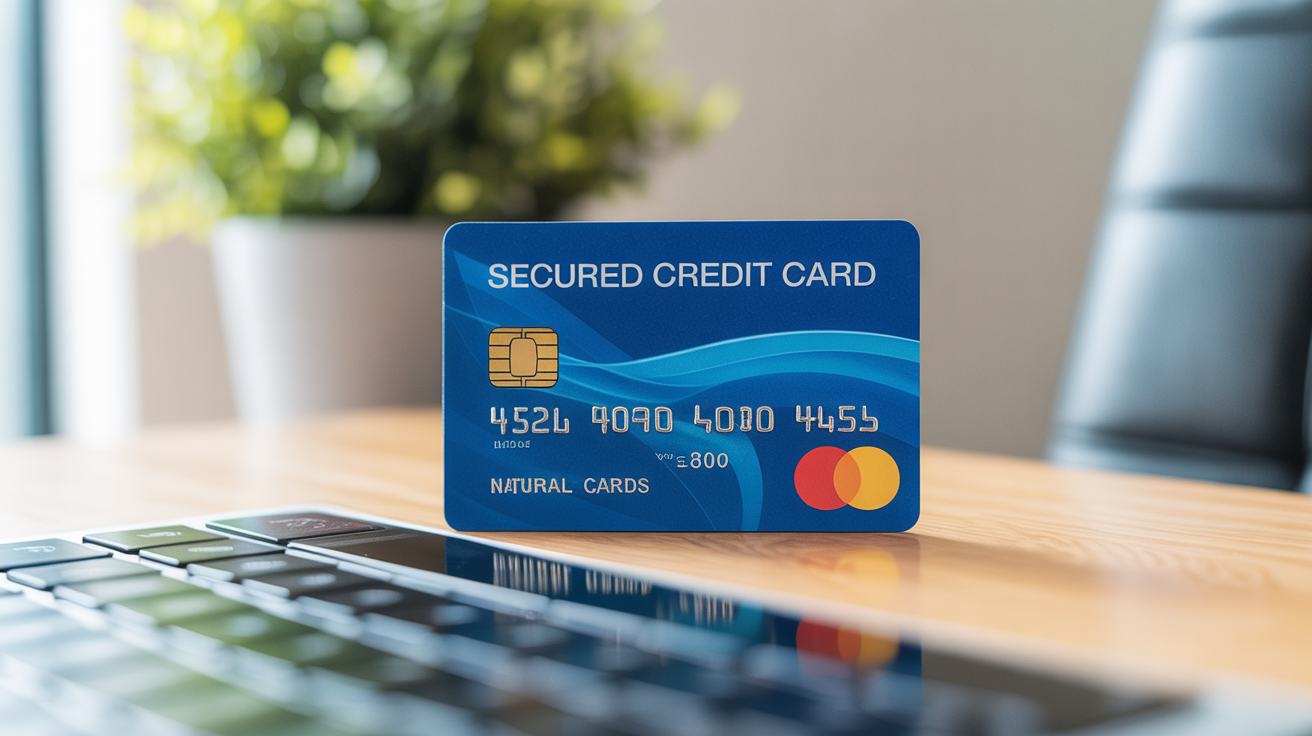
A secured credit card requires a cash deposit before you can use it. An unsecured card does not. That one difference shapes everything else, including who qualifies, what fees you pay, and how long before you can move on to something better.
If you have no credit history or a score that has taken some hits, a secured card is usually the practical entry point. Here is what you need to understand to pick a decent one and actually use it to your advantage.
What Is a Secured Credit Card?
A secured credit card is backed by a refundable deposit you put down when you open the account. That deposit typically becomes your credit limit. Deposit $300, and you generally get $300 of spending room.
The deposit protects the issuer. If you walk away without paying, the bank can apply your deposit to cover what you owe. That reduced risk is why issuers approve applicants who would get turned down for a standard card. Most secured cards are open to people with no credit history at all, thin files, or scores below 580.
How the deposit actually works
Your deposit sits in a separate account. You do not spend it like you spend your credit limit. You charge purchases to the card and then make monthly payments on those charges, just like any other credit card. When you close the account in good standing, or when the issuer converts it to an unsecured card, you get your full deposit back.
Deposit minimums vary by issuer. Many start at $200, though some accept as little as $49. A larger deposit can give you a higher limit, which matters for your credit utilization ratio (more on that below).
What it costs to carry a secured card
Annual fees range from $0 to around $50. Some cards charge monthly maintenance fees or one-time setup fees on top of that. Cards with both an annual fee and monthly fees add up fast, and since the credit-building process works the same regardless of what you pay in fees, the ones with the cleanest fee structure are usually the better choice.
Interest rates on secured cards tend to run high, often between 24% and 29% APR. That is another reason to pay your full balance before the due date each month. The goal is to build credit, not to carry a balance at those rates.
What Is an Unsecured Credit Card?
An unsecured credit card extends you a credit line without requiring any deposit. Approval is based on your credit history, score, and income. This is the type most people think of when they picture a regular credit card.
The catch is that approval thresholds are real. Many entry-level unsecured cards are designed for fair credit (roughly 580 to 669 on most scoring scales), but cards with meaningful rewards, low rates, or high limits generally require good or excellent credit (670 and above). If your score is below 580 or you have almost no history, an unsecured card application will likely come back denied.
Unsecured cards aimed at credit builders
Some issuers market unsecured cards specifically to people with thin or damaged credit. These often carry higher APRs and annual fees to offset the risk the issuer takes. They can work, but compare them carefully against secured options. A secured card with no annual fee frequently beats an unsecured card that charges $75 a year upfront.
Secured vs Unsecured: The Core Differences
Here is a side-by-side look at what sets them apart.
| Feature | Secured Card | Unsecured Card |
|---|---|---|
| Deposit required | Yes, usually equals your credit limit | No |
| Who typically qualifies | No credit or poor credit | Fair to excellent credit |
| Credit limit | Tied to your deposit amount | Set by the issuer based on creditworthiness |
| Annual fees | Often $0 to $50 | Ranges from $0 to $500+ on premium cards |
| Rewards | Uncommon, though some offer basic cash back | Standard on mid-tier and premium cards |
| Path forward | Graduate to unsecured after 12 to 24 months | Upgrade or apply for a better card |
| Deposit refund | Yes, when account closes in good standing | Not applicable |
One thing worth knowing: both card types report to the three major credit bureaus (Equifax, Experian, and TransUnion) in exactly the same way. A secured card managed well builds credit just as effectively as an unsecured card. The reporting does not flag whether a deposit was involved.
How a Secured Card Builds Your Credit
Two factors carry the most weight in most credit scores.
Payment history (about 35% of your score). Paying on time, every month, is the single most powerful thing you can do for your credit. One missed payment can drop a score by 60 to 110 points depending on where you are starting from. Setting up autopay for at least the minimum due prevents accidental misses.
Credit utilization (about 30% of your score). This is the share of your available credit you are actually using at any point. If your secured card has a $300 limit and you carry a $150 balance when the statement closes, your utilization is 50%. Most scoring models reward keeping that figure below 30%, and lower is better. On a $300 limit, that means holding your statement balance under $90.
This is one place where a higher deposit helps directly. A $500 deposit gives you a $500 limit, which makes staying below the 30% threshold easier with the same spending. If you can comfortably deposit $500 instead of $200, the math works in your favor.
To understand which factors move your score and by how much, see the guide on how to improve your credit score.
A simple routine that actually works
Pick one small, predictable expense and put it on your secured card each month. A streaming subscription, a phone bill, or a recurring charge you would be making anyway. Pay the full balance before the due date. That is the whole system. After six to twelve months of this, your payment history starts to show up meaningfully in your file.
Many issuers offer free score monitoring through the card's app or online dashboard. Check it every couple of months to see how things are tracking.
When to Move On From a Secured Card
A secured card is a tool for a specific season, not a long-term home. The goal is to use it for 12 to 24 months, build your score, and then move to something with better terms.
Graduating with the same issuer
Some issuers have a formal upgrade path. After a period of on-time payments, they review your account and may convert it to an unsecured card, returning your deposit and often raising your limit. Ask your issuer directly whether this path exists and what their typical review timeline looks like. Not all of them offer it automatically; sometimes you have to request the review.
Applying for a new card elsewhere
If your issuer does not offer graduation, you can apply for an unsecured card once your score has climbed. Understanding what is a good credit score will help you figure out which score range opens up which products. Once you are approved for a new card, you can close the secured card or, if it has no annual fee, leave it open. Older accounts in good standing help the average age of your credit history.
One practical step to get right: do not cancel your secured card before confirming that your deposit refund is in process. Get written confirmation that the account is closed in good standing and that the deposit will be returned. Most issuers take 2 to 4 weeks to send it.
What to do with the refunded deposit
That deposit coming back is a small but real amount of money. Routing it to a high-yield savings account rather than letting it sit in a checking account means it earns something while you decide what to do with it. It is not a dramatic return, but it is better than zero.
Frequently Asked Questions
Can a secured card hurt my credit?
Yes, if you misuse it. Late payments and carrying high balances relative to your limit will lower your score. The card itself is neutral; the behavior is what matters. A secured card handled carelessly can do real damage, just like any other credit account.
How long does it take to see results?
Most people start seeing measurable score movement within six months. Gains of 50 or more points often come after 12 to 18 months of consistent on-time payments and low utilization. Starting from zero credit history, some people qualify for their first unsecured card within a year of opening a secured one.
Does my deposit earn interest while the bank holds it?
Almost never. Most issuers hold the deposit in a basic account that earns no interest for you. A few put it in an interest-bearing account, so it is worth asking, but it should not be a deciding factor when you are choosing a card.
What happens if I cannot pay my secured card bill?
If you stop making payments, the issuer will eventually apply your deposit against the outstanding balance. Any amount you owe beyond the deposit still goes to collections and gets reported to the credit bureaus. The deposit protects the bank, not you. Treating the card's limit as money you do not actually have is the safest mental model.
Is a secured credit card the same as a prepaid debit card?
No. A prepaid debit card is not a credit account. It does not report to any credit bureau and will not build your credit regardless of how long you use it. A secured credit card is a real credit account with a real credit limit that reports monthly to Equifax, Experian, and TransUnion. The deposit is simply the issuer's backstop against default.